

When we tell someone we're organising a week-long cruise with a fleet of catamarans in Croatia, the first question is usually: what do you actually do for seven days on the water. The answer is simpler than it sounds. We sail from island to island, drop anchor in bays you can't reach by car, and in the evenings we gather on deck or in small harbours. This isn't a coach tour with a checklist of sights. It's a week where the Adriatic is the main character and the list of places is just the backdrop.
Split, the starting point
Croatia 2026 starts and ends in Split, on 26 September and 3 October. It's a major port with an airport nearby, so getting there is straightforward no matter where you fly from. Day one is boarding: meeting the catamaran that will be home for the week, a short briefing, and heading out on the water that same afternoon. There's no point losing a day in the harbour when the sea is ten minutes away.
Every one of the fleet's ten catamarans has a professional skipper, so nobody needs sailing experience to join. Your role is to be on deck, enjoy the view, and decide whether to jump in the water or stay put with a coffee in hand.
The islands, one after another
The route runs through Šolta with Nečujam bay, Brač with the harbour at Milna, the Pakleni Islands and Hvar with Stari Grad, before the fleet turns back through Brač and Trogir to Split. Every day brings different water, different rocks, a different colour of sea. What ties these places together is calm. Even with ten catamarans sailing together, there is always room on the water to feel like the only people in the bay.
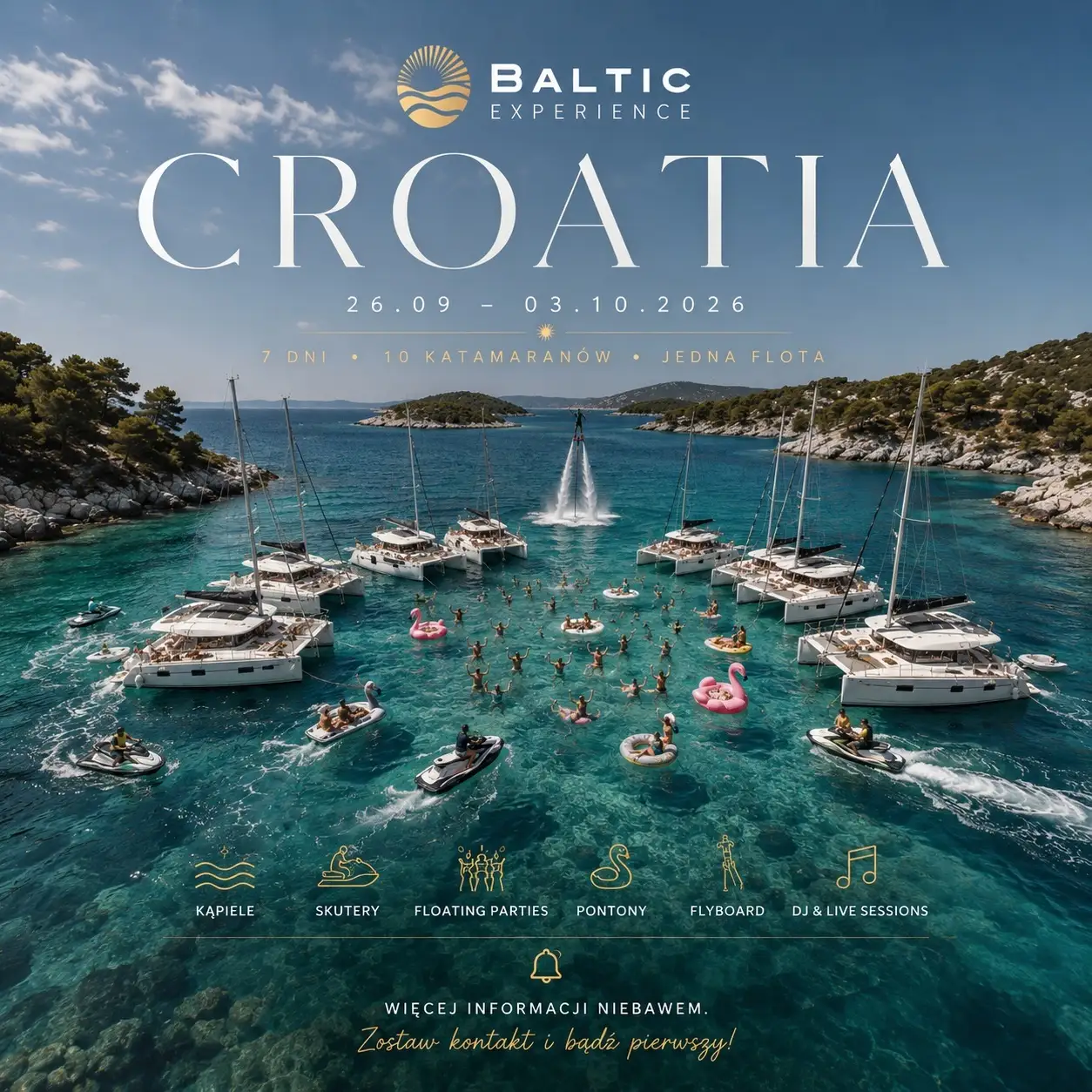
Nečujam on Šolta is one of those bays that impresses from the water, before you've even dropped anchor. The Pakleni Islands off Hvar, meanwhile, are an archipelago of small coves where crystal-clear water meets pine forest running almost down to the shore.
Laid out as a calendar, the week looks roughly like this: day one is Split and boarding, day two is Šolta and Nečujam, day three Brač and Milna, day four the Pakleni Islands, day five Hvar and Stari Grad, day six Brač again from the other side, in Lučice bay, and day seven the way back through Trogir to Split. The order of days can shift slightly with the weather, since it's each catamaran's skipper who decides where to anchor safely on any given night, but the logic of the route stays the same.
Hvar, midweek
Stari Grad on Hvar is where the pace of the week shifts a little. Instead of just bays and anchorages, you get a UNESCO-listed old town, narrow stone streets and an evening buzz that other islands don't have. It's a good point for a walk on dry land, dinner in a restaurant instead of on deck, and a sense that the week on the water has a city chapter too.
It's also the only point in the week when all ten catamarans in the fleet gather in one place for longer, so the evening in Stari Grad has a different character to the quiet anchorages in the bays. More people, more conversations between crews from different boats, a sense that the whole fleet is really sailing together, not just on the same route but through the same week.
What an average day looks like
- Mornings start without rushing: coffee on deck, sometimes a swim before breakfast if the catamaran is anchored in a calm bay.
- The crossing to the next stop usually takes a few hours and is a chance to simply be on the water, no phone, no plan for the next hour.
- In the afternoon the fleet usually reaches the next island or anchors in a bay, where you can swim, snorkel and take the tender ashore.
- In the evening the catamarans gather in harbours or bays, and the plan depends on the day: sometimes dinner in a small town, sometimes an evening together on deck.
- Nights are spent at anchor or alongside a quay, always under the eye of the skipper, who knows these waters and picks a safe place to stop.
Who this week is for
Croatia 2026 brings together around a hundred people on ten catamarans, so it's both an intimate experience on your own deck and a large, lively fleet crossing the Adriatic together. It works well for couples looking for something different from a standard holiday, for groups of friends who want to spend a week together on the water, and for people who already know our Baltic cruises and want the same feeling, stretched over seven days and a warmer sea.
It also works well for anyone who doesn't want to plan a holiday from scratch: no need to search for hotels in different towns, arrange transfers, or book each day separately. The route, anchorages and logistics are already set, and the only decision to make in advance is which standard of catamaran you want to spend the week on.
The thing we hear most often: only once people are there do they understand how different the rhythm of the day feels, when the only plan for the afternoon is the next bay.
What to know before you book
A double cabin starts from 7,400 zł, and a single berth from 3,700 zł, depending on the catamaran standard: Classic on a Lagoon 40, Premium on a Lagoon 42, Premium+ on a Lagoon 46 and Signature on a Lagoon 50. The price includes a week on the water with a professional skipper on every boat. Beyond that, you'll need to arrange your own travel to Croatia, fuel, port fees, food and insurance. It's worth budgeting for the week realistically, not just around the cabin price.
If you'd rather start with something shorter before committing to a full week on the Adriatic, the Sunset Cruise on the Gdańsk Bay gives a very similar feeling in the space of a few hours: sunset over the water, calm, and people on deck who just want to be there. It's a good way to find out how you feel on a catamaran before deciding on a week at the other end of Europe.
Frequently asked questions
No. Every catamaran in the fleet has a professional skipper who runs the boat for the whole week. Your job is to enjoy the cruise, not to sail it.
Around a hundred people on ten catamarans, sailing the same route together, though each deck has its own rhythm and its own group.
Travel to Croatia, fuel, port fees, food and insurance are the participant's responsibility. The price covers a week on the water with a skipper.