


This is the question we hear most often, usually from someone who has just started reading about Croatia 2026 and is trying to picture the route. Hvar or Brač, which is better, where should you spend more time. Our answer is always the same: you do not have to choose. Both islands are on the route, but they have different enough characters that it helps to know what to expect from each.
Hvar: lavender, stone and evening life
Hvar has a reputation as one of the best known islands on the Adriatic, and it earns it. The fleet calls at Stari Grad, one of the oldest towns in Europe, listed as a UNESCO site together with the farming plain around it. Narrow stone lanes, squares lined with old townhouses, restaurants setting tables right onto the cobbles: that is what an afternoon in Stari Grad looks like.
It is also an island known for its lavender fields, whose scent drifts over the inland roads in summer, and for a nightlife that is simply livelier here than on the neighbouring islands. In season, the waterfront in Hvar Town fills with music and people come evening, and the bars stay open long after sunset. If you are looking for the moment in the week to step off the boat and feel a proper, holiday-town rhythm, this is it.
By day, Stari Grad is far quieter than in the evening, so if you like to explore without a crowd, it is worth using the afternoon to walk the old town before the waterfront properly fills. The town has kept a very old street grid, and Tvrdalj Square, with the work of the poet Petar Hektorović, is one of those places easy to walk past by accident, and easy to regret not stopping for.
Brač: stone, quiet and Zlatni Rat
Brač is different. It is the island known for the white stone used to build, among other things, Diocletian's Palace in Split, and, as local legend has it, even the White House. The stonemason village of Milna, where the fleet calls, is a cluster of old houses stepping down to a small marina, far calmer than Hvar's waterfront. There is no crowd here, only the character of an island that has lived off the sea and the stone for generations.
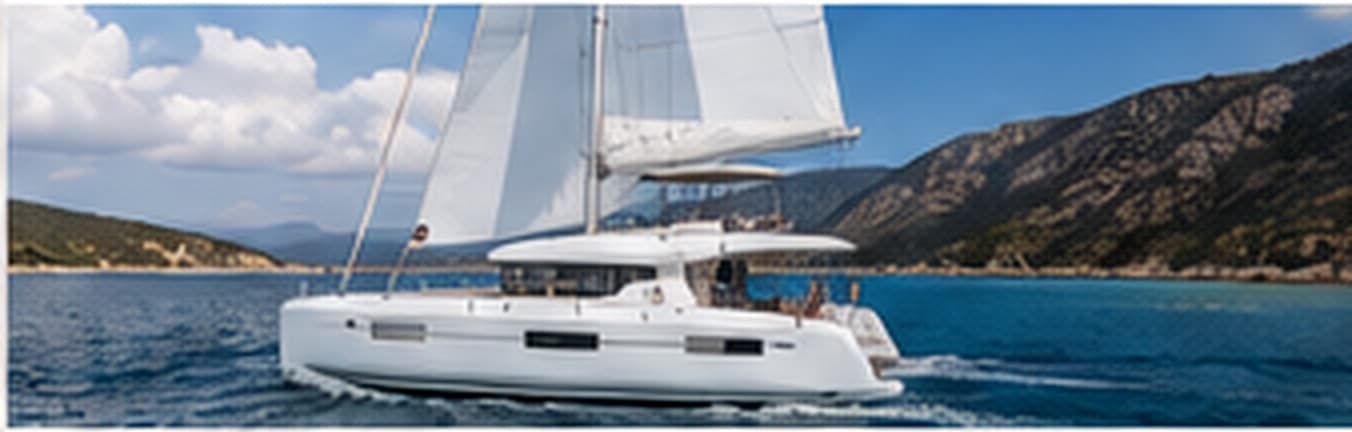
Brač is also Zlatni Rat, one of the most recognisable beaches on the whole Adriatic: a long, narrow spit of sand and fine pebble that shifts shape with the currents and the wind. Even if the day's plan does not include stopping right by the beach, the view from the water alone makes an impression.
Milna, in turn, is a harbour that shows how little it takes for a place to have character. Stone houses stepping down toward the water, a handful of konobas serving local wine and fish, and a marina where sailboats and catamarans outnumber the big motor yachts. It is a place that does not try to draw attention, and that is exactly why it works.
What sets them apart in practice
- Pace: Hvar is livelier and more urban in the evening, Brač stays calm even in high season.
- Harbour character: Stari Grad on Hvar is a historic old town, Milna on Brač is a small sailing village.
- Landscape: Hvar means lavender and vineyards, Brač means white stone and pine-covered slopes.
- Beaches: Zlatni Rat on Brač is one of the most famous beaches in the region, Hvar has more small, pebbly coves close to town.
- Evening: on Hvar it is easier to find dinner overlooking a crowd, on Brač it is easier to find dinner where all you hear is the water.
A fair comparison, with no winner
We are not trying to convince anyone that one island beats the other, because it would not be true. If you like evening life, good food among historic buildings and a moment of feeling like you are in a city, Hvar will give you that better. If you prefer quiet, stone lanes without a crowd and a beach you will remember for months after you get home, Brač will make the bigger impression on you. The Croatia 2026 route gives you both in a single week, so in practice which island to pick is not really a question at all.
It is also worth remembering that the mood of both islands changes with the time of day. Hvar in the morning can be almost as quiet as Brač, before the bars open and the waterfront fills up. Brač in the evening, especially in Milna, can surprise you with a modest but pleasant spark of life by the harbour, when local families come out for a walk after sunset. Neither island is only one mood all day long.
People who ask us whether we prefer Hvar or Brač usually say the same thing once they are back home: good thing we did not have to choose.
Vineyards, olives and local flavours
Both islands live off the same sea, but the land gives them different things. Hvar is famous for its vineyards, especially around Stari Grad, where the old farming plain, listed alongside the town as a UNESCO site, has produced wine since the days of the ancient Greek settlers. Brač, by contrast, is above all olive oil and cheese made from the milk of sheep grazed on the stony slopes, where little else wants to grow. If you like to taste a region, not just look at it, it is worth asking locally about both.
How it fits into the week's schedule
The fleet passes Brač twice: once on the way to Hvar via Milna, once on the return leg via Lučice bay, so the island appears in two entirely different guises. Hvar falls mid-week, when it is worth going ashore for longer and feeling the change of pace. That shift in rhythm, between the stone quiet of Brač and a lively evening in Stari Grad, is one of the moments of the week that tends to stay with you most.
Thanks to this double meeting with Brač, you see the island from two quite different sides: first the port of Milna mid-week, then the quieter bay of Lučice closer to the end of the cruise. It is a good illustration that even a single island on the Croatia 2026 route can show more than one mood, if you have the time to look closer.
Frequently asked questions
Both work well for either. Hvar gives couples a romantic evening in town and gives a group of friends a lively waterfront. Brač gives couples quiet and views, and gives a group of friends an intimate spot for an evening together away from the crowd.
No. The Croatia 2026 route includes both islands over the course of the week, so you do not need to settle on just one.
Approaching Brač, you can see the beach's distinctive spit from the sea, even if the day's plan is focused on another part of the island.